
The Atomic Unit of Healthcare
Strip away the layers of technique and technology, and what remains is irreducible: one person suffering, another responding.
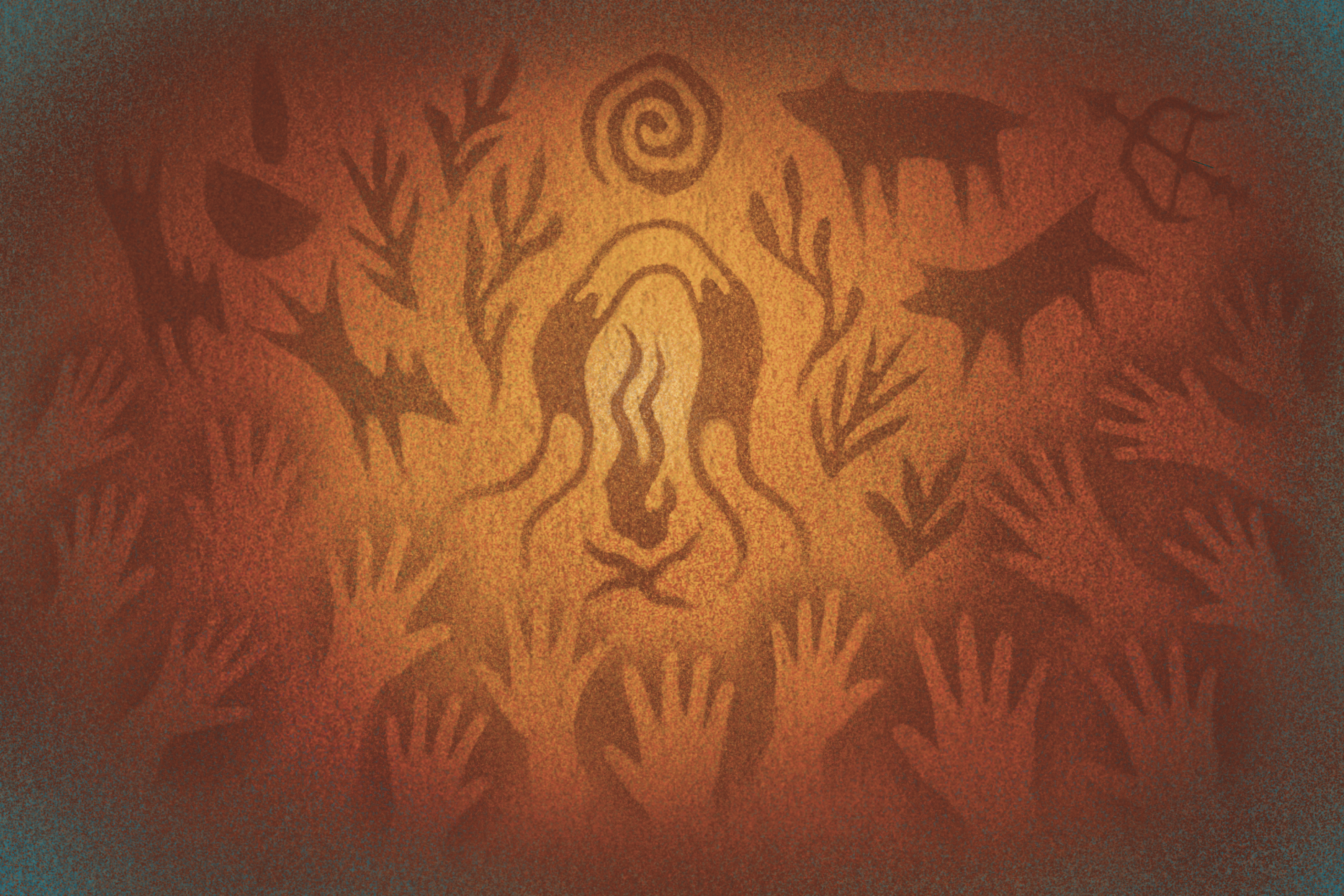
If you were alive during the Upper Paleolithic period 30,000 years ago, you would have been born into a revolution that few people today talk about.
Your world might be a narrow river valley beneath limestone cliffs. There, if your group was fortunate, you would have staked out a camp just above the waterline, where the earth sloped toward the herds of caribou that passed each season. Around you, the earliest signs of human ingenuity would be taking shape. Flint blades—sharper than modern surgical steel—were traded, tested, and reshaped by hand. Someone, maybe a woman in her 30s (old by your standards), would discover that heating a stone bowl with animal fat could keep a flame alive through the night.
And if one day a swelling appeared on your leg and your breath grew shallow, a healer would come to crouch beside you. Their tools were not many: a pouch of roots, a carved antler, a bundle of herbs. But they would study your face, feel the heat of your skin, ask questions, and lay a hand on your chest.
You would not fill out a form, check into a queue, or tap through a portal. You would look into their eyes, and they into yours. And that moment of connection was the act of medicine.
Even today, when we dial a clinic phone and listen to hold music, or sit in a waiting room leafing through magazines, what we're really waiting for is not the system. We're waiting for the moment that someone listens and gives us hope.
This relationship between healer and patient is the atomic unit of healthcare.
Whether that relationship involves one person or many, what matters is continuity, clear accountability, and sustained attention. When care fragments into brief transactions with interchangeable providers the atom breaks.
The story of modern healthcare is the story of building a system that slowly forgot what it was built to support. This essay argues we can rebuild by starting again with the atomic unit: the clinician-patient relationship.
The First Relationship—Campfire Medicine and the Atomic Unit
In 1957, in the foothills of Iraqi Kurdistan, archaeologists uncovered a skeleton that changed how we understand medicine.1 It belonged to a Neanderthal who lived nearly 50,000 years ago. The bones were twisted and worn, marked by a lifetime of injury. One arm was gone, most likely from trauma. The left eye socket was crushed and healed into a misshapen rim, leaving him blind on that side. By every account, this was a body that should not have survived. And yet it had.
This individual, known as Shanidar 1, lived well into old age (estimated to be 40-50 years old). He could not have hunted, defended himself, or gathered food alone. His survival is evidence that Neanderthals, often caricatured as brutes, practiced something we would recognize immediately: caregiving.
Shanidar 1 is not unique. Other Neanderthal skeletons show healed fractures, skulls that mended, rib wounds that closed. There is even evidence of chronic disease that would have required daily support. Margaret Mead reportedly once remarked that the first sign of civilization is a healed femur, because it means someone stayed long enough with the injured person for bone to knit. The archaeological record shows that care is older than agriculture, older than writing, older than cities. It is one of the first things that made us human.
What enabled Shanidar 1 to keep living is not so different from what allows people today to keep living. In older adults with hip fractures, randomized trials show that multidisciplinary rehabilitation, including caregiving and psychosocial support, reduces the risk of death or institutionalization within a year.2 For every 25 patients treated this way, one poor outcome is prevented. The bone heals at the same rate, but the difference is relationship.
Science saves lives, but its impact is multiplied by care. A meta-analysis of more than 40,000 patients found that psychosocial support interventions increased survival by 20% in cardiovascular disease and cancer.3 A surgeon may repair a hip, but it is caregivers who help the patient walk again. The two cannot be separated. Strip away the layers of technique and technology, and what remains is irreducible: one person suffering, another responding. That is a clinical relationship: Continuity, accumulated context, care compounded over time.
Think again of Shanidar 1. His companions had no hospitals, no pharmacies, no insurance systems. Yet he lived because they slowed their pace, shared food, and carried him through winters. 50,000 years later, our data say the same thing: caregiving and support still change survival curves. The science works, but relationship multiplies it.
This is the primary relationship of medicine, and it is still the foundation. Forget this, and the structure collapses.
Systems-First Thinking Breaks the Atom
Walk into a modern exam room and you will often see the doctor's back. Their attention is fixed on a glowing rectangle. Fingers type, boxes are checked, templates are filled. The patient waits for eye contact. What should be a conversation has become data entry.
It was not always this way, but the path here is older than we think. In the 19th century, hospitals transformed from charitable shelters into engines of industrial medicine. Advances in sanitation, anesthesia, and germ theory turned them into places of survival. Rows of beds filled cavernous wards. Charts hung at the foot of each bed like factory ledgers. Doctors began to think in terms of populations and protocols, not just individuals.
Medicine was scaling, and scale required systematization.
This brought enormous gains. Standardized training raised quality. Vaccines, antibiotics, and surgery extended life by decades. Scale saved millions. But it also imported a mindset: the encounter was just one cog in a larger machine. Care became not only about presence, but about throughput.
A public-health leader might object that relationships don't vaccinate a country, run trauma systems, or prevent antimicrobial resistance; systems do. They're right. The question isn't whether we need systems, but whether we design systems around relationships — or design relationships out of systems.
Consider the electronic health record. It promised efficiency, safety, and integration. In reality, it often delivered overload. Studies show that physicians now spend nearly a third of their working hours on documentation, often more time on screens than with patients. Physicians average 3.8 hours per day on their EHRs.4 In standard primary care, physicians spend 35% of visit time looking at screens, only 46% looking at patients. Unsurprisingly, burnout follows.
The purpose of the chart has also shifted. It began as a thread tying encounters together, a memory aid and record for the patient. Over time it became the currency of the system itself. Payment, liability, and accreditation are transacted through the note. The chart is no longer just a tool. It is the product.
Virtual care reveals the same choice in sharper relief. The technology itself is neutral. It can extend relationships across distance or industrialize their absence. Consider a patient with diabetes who video-calls their own physician for medication adjustment, who messages their care team about concerning symptoms, or who maintains relationship despite physical separation. This is the atomic unit extended, not replaced.
But virtual care also enables more complete fragmentation than was previously possible. Instead of seeing their own physician after-hours, the patient video-calls a stranger employed by a corporation three provinces away. And the encounter is optimized for billing efficiency: it lasts seven minutes, there is no physical exam, and prescriptions are generated from templates. The patient will never see this physician again. The physician will never follow up. The system approaches near-perfect transactionality. Virtual walk-in clinics have 3x the risk of emergency room visits in the next week.
The first model extends relationship across space. The second makes its absence more efficient than ever before.
Every technological advance in medicine—hospitals, records, telemedicine—presents this choice. We can build hospitals that house healing relationships or hospitals that process patients like widgets. We can build electronic records that deepen continuity or records that turn clinicians into data entry clerks. We are building virtual care that will either extend relationships or perfect their elimination.
The irony is that these innovations were meant to protect the atomic unit, not replace it. Yet scaffolding has come to dominate the structure. We began to mistake the system for the substance. A ward filled with beds looked like medicine. A dashboard full of labs looked like medicine. But these are shadows. The substance is still the relationship.
In truth, the system is only a multiplier. It amplifies what we build it to amplify. If we build it to amplify relationships, it can. But when we optimize for throughput, we get throughput. And when we optimize for transactions, we get transactions.
When the Atomic Unit Breaks, Patients Seek It Elsewhere
The fragmentation of the atomic unit creates an opening for others to step in. Patients increasingly seek care from practitioners outside conventional medicine—such as naturopaths, chiropractors, and functional medicine providers—not because the efficacy of their techniques is stronger (it usually isn't), but because these practitioners have maintained something closer to the atomic unit.
Here a study tells an uncomfortable story. In a randomized controlled trial of 246 postal workers at risk for cardiovascular disease, participants receiving naturopathic care showed significantly greater reduction in 10-year cardiovascular risk compared to enhanced usual care.5 Another trial found naturopathic care for chronic low back pain produced better functional outcomes than standardized physiotherapy.6 For Type 2 diabetes, when researchers interviewed patients receiving adjunctive naturopathic care, a dominant theme identified was simply "the contrast with conventional medical care." Patients described their visits as patient-centered, collaborative, and holistic.7 They received individualized counseling that built self-efficacy and pragmatic recommendations tailored to their lives. The researchers observed that this approach aligned with behavior change theory, and clinical strategies our own evidence shows are most effective.*
These aren't magic herbs. The interventions in these trials were dietary counseling, relaxation techniques, individualized health promotion—the same tools we prescribe. The difference wasn't what was done, but how: 60-minute appointments, continuous relationships, attention without interruption, treatment of the whole person rather than the diagnosis alone.
This should disturb us. When patients choose practitioners with less training and weaker evidence bases because the relationship is better, that's not a failure of patient education. It's a system failure. We possess both the evidence and the clinical expertise, yet work in a structure that makes it nearly impossible to deliver the kind of care our own research says works best.
Naturopathic physicians didn't discover something new. They simply preserved the atomic unit while conventional medicine dismantled it in the name of efficiency. They have time for 60-minute appointments. They build continuity because their business model depends on retained relationships rather than volume. They listen without a screen between them and the patient because they haven't been forced to structure their practice around billing codes and quality metrics.
We can debate the clinical validity of specific naturopathic interventions—and we should. But we cannot ignore what their success tells us about what patients are missing in our system. Strip away the questionable supplements and unproven treatments, and what remains is time, attention, and continuity.
When Accountability Evaporates
When the atom is intact, accountability is indivisible. But when medicine fragments into handoffs, dashboards, and protocols, accountability begins to dissolve. Systems break in the gaps between people.
Unstructured handoffs and fragmented care are among the most dangerous points in medicine. Nearly two-thirds of sentinel events trace back to communication failures during transitions, where responsibility was blurred and ownership lost.8 In complex systems with multiple providers, the question of "who owns this patient?" often has no clear answer. The result is omission of critical details, delayed decisions, and missed follow-ups.9 When people are treated like cogs, they behave like cogs, each focusing on their narrow function while the patient falls through the spaces between them.
Patients sense when no one is accountable. They feel lost in the system, neglected, or abandoned, and they are far more likely to file complaints or malpractice claims when responsibility is diffuse.10 Clinicians respond with defensive medicine—documentation written to protect against litigation rather than to deepen care. In some countries, no-fault models have shown that when compensation is decoupled from blame, trust is preserved and openness is possible. Without that shift, accountability drifts from the relationship itself into the courtroom, and the atom breaks down further. By contrast, when a clinician maintains ownership of the relationship, patients experience lower mortality, fewer hospitalizations, and higher adherence.11 Clear accountability ensures that decisions are made with context, continuity, and care.12 The boundaries that define professional roles become permeable when each physician takes personal responsibility for each patient.
The atom not only binds responsibility to the patient; it sustains the clinician as well. Clear ownership of the physician–patient relationship is strongly tied to higher morale, greater professional satisfaction, and lower burnout.13 When a clinician knows that this patient is mine to care for, the work carries meaning. Autonomy, pride, and presence follow.
Tight professional boundaries may protect individuals from overwork, but they fragment care. The atomic unit dissolves boundaries not by removing all limits, but by creating a relationship strong enough that one person will look beyond their narrow role to ensure no one falls through the gaps.
The Blueprint—Building Around the Atom
If Gall's Law is true—that every complex system that works is built from simple systems that work—then healthcare must begin at its smallest functioning part.14
The atomic unit is not the hospital, the clinic, or the insurance plan. It is the relationship: one person suffering, another responding.
Everything else in healthcare exists to support this relationship. Hospitals, electronic records, and regulations were designed to protect the atom, yet too often they dominate it. When the system is built first, the relationship is forced to conform. The only way forward is to start small, make it work, and let it grow.
Systems theorists often visualize the world as networks—nodes connected by lines. In healthcare we tend to draw the nodes as actors: the patient, the nurse, the physician, the hospital. The lines represent the relationships between them. This seems natural, but it leads us astray. It makes us think that the institution is the substance, and the relationship is the afterthought.
But what if we invert it? What if the relationship itself is the node?
This inversion has a foundation in social science. In the 1970s, sociologist Harrison White transformed the way we understand social systems. Traditional sociology assumed that people are the units and relationships are the links between them. White turned this inside out. He showed that actors are not defined outside their ties—they are produced by them. An individual is not an isolated point on a graph, but a knot where relationships converge. This insight gave rise to modern social network analysis.15
Seen this way, healthcare looks different. The unit of medicine is the relationship between suffering person and healer; the actors are roles that arise inside it. A physician is a physician not because of a title or a license, but because of the role they play in the node of relationship.
This inversion is not abstract. It has been tested, refined, and proven for more than 50 years in a place you can visit today.
Walk up Gottingen Street in Halifax's North End on a cold November morning and you'll see gentrification in motion. New condominiums in various stages of development cast a long shadow over the century-old row houses. Cafes and restaurants advertising $5 coffees occupy storefronts directly across the Salvation Army homeless shelter. The Sunday morning brunch crowd waits patiently outside while their counterparts across the street finish their morning smoke. Once you finish your coffee or finish your morning cigarette you walk north to the corner of Gottingen and Nora Bernard and you come to a red brick building. This is home to the North End Community Health Centre. Outside, even in the biting wind, people congregate—some homeless, some recently housed, some looking for a place to be. It doesn't look revolutionary, but what happens inside offers a blueprint for how to build healthcare around the patient-provider relationship and the community they live in.
Halifax's North End is home to a historically diverse community—including members of the Black African Nova Scotian community, some of whom were forcibly displaced from their homes following the destruction of Africville, a community established by Black loyalist refugees in the 1840s. The New Horizons Baptist Church (originally the African Baptist Church) was created in 1832 and remains a symbol of the deeply rooted connections the Black African Nova Scotian community had and continues to have to this day. Decades, if not centuries, of overt and systemic racism directly impacted this community's access to health care services. The repeated poor treatment and lack of options led many individuals and families to deny seeking care unless in crisis. In 1971, a group of community members envisioned something different: a clinic located within their neighborhood that would prioritize the needs of the community. What was built over the next five decades reveals three principles that protect the atomic unit while allowing it to exist within larger systems.
To scale relationships without breaking them, three things must be protected: autonomy (who governs), alignment (who pays for what), and intimacy (how professionals relate).
1. Protect Autonomous Governance
The clinic is managed by a community board of directors and an appointed executive director. It controls its own hiring, sets its own policies, and determines its own pace. A long-serving physician explained why this matters: "We have always maintained independence from the health authority, which is crucial. In fact, someone from the health authority said to me years ago, 'You know, if you had come under our control that clinic wouldn't still be operating.' It's the sense of personal investment we had in it, the sense that we all had an impact, and I don't think that would have existed if we had been under the control of the health authority."
A health authority official acknowledging that their system would have ended the clinic. Not through malice, but through the inevitable logic of large-scale healthcare administration: standardization, efficiency metrics, throughput optimization.
The evidence supports this intuition, though not without complexity. Clinician-owned practices—where physicians control operations—improve quality outcomes while reducing burnout compared to non-clinician-owned practices.13 Small practices with 10 or fewer physicians show better continuity and accessibility, especially with features like 24-hour phone access and nurse availability.16
But autonomy creates trade-offs. As practices expand beyond 10 physicians, continuity declines (6.6% worse than stable-sized practices). This suggests the protective effect of autonomy works best at small scale.17
Unlike other Halifax clinics, the North End Community Health Centre does not cap patient numbers. It serves everyone in its catchment area, plus exceptions for those released from prison, vulnerably housed, or struggling with addiction. The clinic says yes when the system says no. This requires flexibility that centralized authorities cannot accommodate: flexible scheduling, hiring for "heart" and cultural fit, and flat hierarchies where nonphysician staff lead programs.
The principle: Small-scale governance protects relationship-first care from optimization pressures. Large health authorities must optimize for standardization. Small, autonomous units can optimize for trust. Both are necessary, but they cannot easily occupy the same organizational space.18
The challenge is that this autonomy has never been secure. At the North End Community Health Centre, funding freeze beginning in the early 2000s forced cuts to administrative support, health promotion programs, and nursing coverage by 50%. Staff worry that increased partnership with the health authority might compromise their ability to provide relationship-based care. Relationship-first healthcare works, but it requires structural protection.
Care is older than agriculture, older than writing, older than cities.
It is one of the first things that made us human.
Governance is just the first way you decide whether the atom stays intact or gets buried in its own scaffolding.
2. Align Funding With the Care Model
In the 1990s, the North End Community Health Centre made an unusual request. The physicians asked the provincial government to stop paying them fee-for-service.19
"Because of the nature of the work we do and the complexity of the cases we saw, we went to the government and said, 'Please, can you put us on salaries as opposed to fee-for-service?'" one physician recalled. "What fee-for-service does is encourages quick turnaround; salary supports taking the time that we need."
This was not ideological. It was recognition that their patient population required longer visits and consistent relationships. The fee-for-service model penalized them for doing the work properly.
The clinic now receives lump-sum "global funding" in return for provision of a set number of clinical hours. All staff receive salaries. The payment is for time and presence, not transactions. As the clinic's own materials state: "The who and how of health care (the relationship) is often more important than the what (the intervention) in impacting health."
The research on physician payment reaches a simple conclusion: clinicians change what they do when we change how we pay them. Fee-for-service reliably increases volume, while salary or capitation shift effort toward fewer, longer, more continuous relationships. Even small tweaks in performance incentives can pull behavior back toward whatever the metric rewards.20,21
The question isn't which payment model is morally superior, but which one aligns with the care model for the population served. Complex patients require time and continuity: pay for time. Acute problems require access: pay for encounters. Chronic disease requires coordination across years: pay for coordination and outcomes. Match incentives to objectives, or the atom fractures.
3. Design Relationships That Break Professional Distance
Providers at the North End Community Health Centre practice what they call relationship-based care. One provider defined it: "It's based on trust, on taking time to build trust, on continuing the relationship when folks don't necessarily need you. Accepting them where they are, without judgement. Staying with someone even when they're doing unhealthy things. You need to disagree in a nonjudgmental way so that folks feel that you care. It's based on a little looser boundary than the professional boundary we had in-hospital. It's about keeping the relationship going even when there isn't a defined need."
Another provider was more direct: "I create a genuine relationship with patients. I don't establish the same degree of rigidity of professional boundary that you're told to in school. There are aspects that need to be there for safety—confidentiality, respect for each other's expertise—but not the rigid distance."
The contrast with conventional practice is measurable. In standard primary care using electronic health records, physicians spend 35% of visit time looking at screens, only 46% looking at patients.22 The technology designed to support care has become a barrier to the relationship itself.
What does relationship-based care look like operationally? Providers speak in their patients' language, adapting vocabulary and examples to ensure understanding. They give therapeutic hugs. They enter homes with bedbugs. They check in during periods of wellness, not just crisis. They practice harm reduction, staying in relationship even when patients make choices that counter medical advice.
The clinic cultivates relationship-based care through hiring for diversity and cultural fit, maintaining an "ongoing consent process" that explicitly asks permission before each step, and using physical space to reduce hierarchy—the mobile outreach van, home visits, even the clinic's "dinginess" helps patients feel less intimidated.
Technology can either support or obstruct this stance. AI ambient documentation that transcribes in the background reduces physician charting time by 30%,23 while patients report their physicians seemed more focused. When technology works in the background, the relationship returns.
The principle: The relationship requires breaking traditional professional distance while maintaining professional safety. This must be cultivated through hiring, modeled in organizational culture, supported by technology that disappears rather than divides, and protected through peer support systems. This is not taught in most medical schools. It must be deliberately built.
From these examples we can extrapolate three structural principles that protect the relationship while allowing it to function at scale:
Autonomous governance protects relationship-first care from optimization pressures that fragment relationships. Small-scale, community-led organizations can prioritize trust and continuity in ways that large health authorities cannot. Both are necessary. But they must remain structurally separate.
Aligned funding matches payment to care model. For complex populations requiring long appointments and consistent relationships, pay for time and presence. For other populations and care models, other structures may work. The principle is alignment, not ideology.
Relational professional practice breaks traditional distance while maintaining safety. This requires deliberate cultivation through hiring, organizational culture, technology that disappears rather than divides, and peer support systems that sustain providers through the emotional demands of genuine relationship.
We can build systems that protect the relationship. Or we can optimize to extinction.
Start small. Make it work. Let it grow. And then the hard part—leave it alone.
Epilogue—The Atom Endures
In the firelit cave, medicine began with nothing more than presence. One person suffering, another responding. No hospitals, no records, no insurance systems—only the relationship.
50,000 years later, the scaffolding has grown immense. Hospitals keep expanding, records sprawl across servers, algorithms parse data faster than the human eye. Yet on a cold November morning at the corner of Gottingen and Nora Bernard, what matters most remains unchanged. Inside a red brick building, providers still meet patients where they are. They practice what those Paleolithic healers knew: the relationship is the foundation of healthcare.
References
- Crubezy E, Trinkaus E. Shanidar 1: a case of hyperostotic disease (DISH) in the Middle Paleolithic. Am J Phys Anthropol. 1992;89(4):411-420. ↩
- Handoll H, Cameron I, Mak J, Panagoda C, Finnegan T. Multidisciplinary rehabilitation for older people with hip fractures. Cochrane Database Syst Rev. 2021;11(11):CD007125. ↩
- Smith T, Workman C, Andrews C. Effects of psychosocial support interventions on survival in inpatient and outpatient healthcare settings: a meta-analysis of 106 randomized controlled trials. PLoS Med. 2021;18(5):e1003595. ↩
- Rotenstein L, Holmgren A, Horn D. System-level factors and time spent on electronic health records by primary care physicians. JAMA Netw Open. 2023;6(11):e2344713. ↩
- Seely D, Szczurko O, Cooley K, Fritz H. Naturopathic medicine for the prevention of cardiovascular disease: a randomized clinical trial. CMAJ. 2013;185(11):e409-e416. ↩
- Szczurko O, Cooley K, Busse J, Bernhardt B. Naturopathic care for chronic low back pain: a randomized trial. PLoS One. 2007;2(9):e919. ↩
- Oberg E, Bradley R, Sherman K, Catz S. Patient-reported experiences with first-time naturopathic care for type 2 diabetes. PLoS One. 2012;7(11):e48549. ↩
- Kitch B, Cooper J, Zapol WM. Handoffs causing patient harm: a survey of medical and surgical house staff. Jt Comm J Qual Patient Saf. 2008;34(10):563-570. ↩
- Starmer A, Spector N, Srivastava R. Changes in medical errors after implementation of a handoff program. N Engl J Med. 2014;371(19):1803-1812. ↩
- Tigard D. Taking the blame: appropriate responses to medical error. J Med Ethics. 2019;45(2):101-105. ↩
- van Walraven C, Oake N, Jennings A, Forster A. The association between continuity of care and outcomes: a systematic and critical review. J Eval Clin Pract. 2010;16(5):947-956. ↩
- Noyes R, Kukoyi O, Longley S, Langbehn D. Effects of continuity of care and patient dispositional factors on the physician-patient relationship. Ann Clin Psychiatry. 2011;23(3):180-185. ↩
- Rotenstein L, Cohen D, Marino M, Bates D, Edwards S. Association of clinician practice ownership with ability of primary care practices to improve quality without increasing burnout. JAMA Health Forum. 2023;4(3):e230299. ↩
- Gall J. Systemantics: The Underground Text of Systems Lore. How Systems Really Work and How They Fail. Ann Arbor, MI: General Systemantics Press; 1986. ↩
- White H. Identity and Control: How Social Formations Emerge. Princeton, NJ: Princeton University Press; 2008. ↩
- Haggerty J, Pineault R, Beaulieu M. Practice features associated with patient-reported accessibility, continuity, and coordination of primary health care. Ann Fam Med. 2008;6(2):116-123. ↩
- Forbes L, Forbes H, Sutton M, Checkland K, Peckham S. Changes in patient experience associated with growth and collaboration in general practice: observational study using data from the UK GP Patient Survey. Br J Gen Pract. 2020;70(701):e906-e915. ↩
- Grudniewicz A, Tenbensel T, Evans J, Steele Gray C. Complexity-compatible policy for integrated care? Lessons from the implementation of Ontario's Health Links. Soc Sci Med. 2018;198:95-102. ↩
- Hudson A, Boudreau A, Graham J. North End Community Health Centre in Halifax, NS. Can Fam Physician. 2019;65(8):e344-e355. ↩
- Jia L, Meng Q, Scott A, Yuan B, Zhang L. Payment methods for healthcare providers working in outpatient healthcare settings. Cochrane Database Syst Rev. 2021;1(1):CD011865. ↩
- Li X, Teng J, Li X, Han Y. The effect of internal salary incentives based on insurance payment on physicians' behavior: experimental evidence. BMC Health Serv Res. 2023;23(1):1410. ↩
- Asan O, Smith P, Montague E. More screen time, less face time—implications for EHR design. J Eval Clin Pract. 2014;20(6):896-901. ↩
- Duggan M, Gervase J, Schoenbaum A. Clinician experiences with ambient scribe technology to assist with documentation burden and efficiency. JAMA Netw Open. 2025;8(2):e2460637. ↩